
Portable-Battery-Energy-Storage-Systems
Best Solar Battery Backup System for Home Energy Independence

Best Solar Battery Backup System for Home Energy Independence

📌 Description

Discover the best solar battery backup systems for home energy independence. Compare Tesla Powerwall, LG RESU, Enphase, and Generac to find your perfect fit.

Updatetime : 2026-08-17

Author : Admin

Hits : 1

📌 Product Introduction

Article Outline

A comprehensive guide to choosing and installing the best solar battery backup system to achieve energy independence for your home.

Why Solar Battery Backup is Essential for Energy Independence
Top Solar Battery Systems: Features, Capacity, and Costs Compared
Key Factors to Consider When Choosing a Solar Battery
Installation and Maintenance: What to Expect
Maximizing Your Investment: Incentives, Savings, and Future-Proofing

The hum of the refrigerator, the soft glow of evening lights, the silent charge of a laptop—these are the quiet rhythms of a connected home. Yet, for millions, this symphony is interrupted the moment the grid falters. A solar battery backup system transforms a home from a passive consumer of electricity into a self-sufficient entity, a small-scale power plant in its own right. It is the difference between waiting in darkness and watching the sunset with the knowledge that your lights will stay on, powered by the sun you collected hours earlier.

The modern market offers a fascinating array of energy storage solutions, each with distinct chemistries and personalities. Lithium-ion, particularly the iron phosphate variant, dominates the residential landscape for its longevity and safety. The Tesla Powerwall, a sleek, wall-mounted monolith, remains the cultural icon, offering 13.5 kWh of usable capacity. LG’s RESU series provides a more compact, modular approach, while the Enphase IQ Battery leverages microinverters for granular, per-unit control. For those prioritizing raw power output, the Generac PWRcell offers a scalable, cabinet-style system that can be tailored to heavy-load homes. The choice is rarely about which is "best" in a vacuum, but rather which chemistry and form factor aligns with your specific consumption patterns.

SystemUsable Capacity (kWh)Peak Power (kW)Warranty (Years)
Tesla Powerwall 313.511.510
Enphase IQ 5P5.03.8415
LG RESU16H Prime16.09.610
Generac PWRcell9.0 - 18.08.0 - 16.010

Selecting a battery is less about the hardware itself and more about a forensic audit of your lifestyle. The first question is not "how much power can it hold?" but "what is my essential load?" A critical loads panel, which separates vital circuits like medical devices, refrigeration, and internet routers from the rest of the house, allows a smaller, more affordable battery to work miracles. Dive into your utility bill's "demand" section; that peak kilowatt draw dictates the inverter's required power output. A battery with immense capacity but a weak inverter will still trip when the well pump and microwave fire simultaneously. Conversely, a high-power inverter with small capacity will drain in minutes. The art lies in balancing energy (kWh) for duration and power (kW) for instantaneous demand.

A modern home with solar panels and a battery backup system, symbolizing energy independence at dusk.
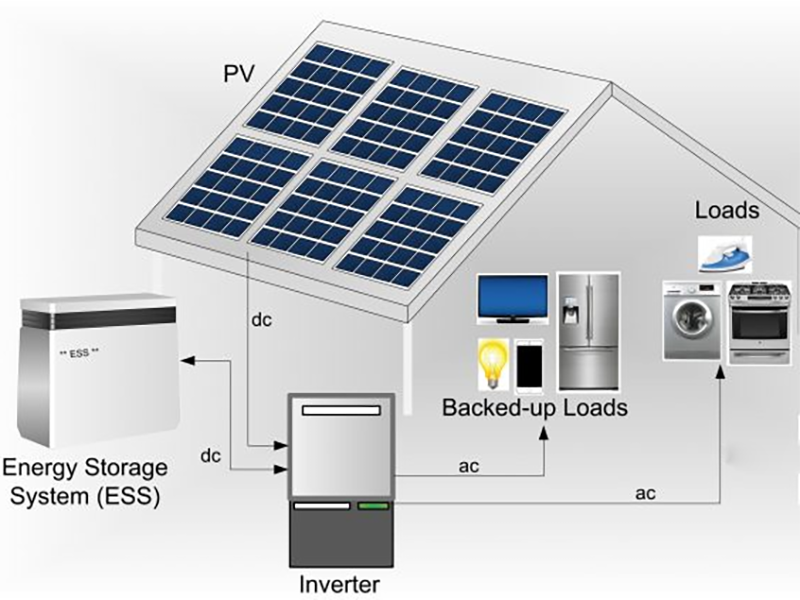
The installation is not a simple swap of a fuse. A typical project involves a site survey, electrical panel upgrades, and meticulous communication between the inverter, battery, and your existing solar array. These systems operate on high-voltage DC, so professional installation is non-negotiable, often taking one to three days. Maintenance, thankfully, is minimal—most modern units are sealed, self-monitoring, and update their firmware over Wi-Fi. Your primary task is to observe the companion app, watching the graceful ballet of electrons as you charge from the sun and discharge at night. The only physical chores are keeping the unit’s ventilation clear and ensuring the ambient temperature remains within its operating range.

The financial calculus has shifted. The federal Investment Tax Credit (ITC) now offers a 30% credit on standalone batteries, a significant reduction in upfront cost. Pair this with net-metering policies that allow you to export excess daytime solar at retail rates, and the battery becomes a financial arbitrage tool—charging during peak sun and discharging during peak utility rates, a practice known as "time-of-use load shifting." As virtual power plant (VPP) programs emerge, your battery can even generate income by selling stored energy back to the grid during regional emergencies. The true return on investment, however, is measured in resilience. When a hurricane knocks out the neighborhood for a week, your freezer stays cold, your home office stays lit, and you realize that the greatest luxury is not a bigger television, but the quiet, unshakeable peace of mind that comes from knowing you are, quite literally, powered by your own roof.

Frequently Asked Questions (FAQ)

Q: What is the best solar battery backup system for home energy independence?
A: The best system depends on your needs. Top options include Tesla Powerwall 3 (13.5 kWh), Enphase IQ 5P (5 kWh), LG RESU16H Prime (16 kWh), and Generac PWRcell (9-18 kWh).
Q: How do I choose the right battery capacity for my home?
A: Calculate your essential load by identifying critical circuits like medical devices and refrigeration. Balance energy (kWh) for duration and power (kW) for peak demand to avoid over or under-sizing.
Q: Can a solar battery backup system work without solar panels?
A: Yes, it can charge from the grid, but for true energy independence, pairing with solar panels is recommended to store solar energy for use during outages or peak times.
Q: How long does installation take and is it DIY-friendly?
A: Professional installation is required due to high-voltage DC components. It typically takes one to three days, including site survey and potential panel upgrades.
Q: What maintenance is required for these battery systems?
A: Maintenance is minimal. Most modern units are sealed and self-monitoring, with firmware updates via Wi-Fi. You only need to monitor performance through the companion app.