

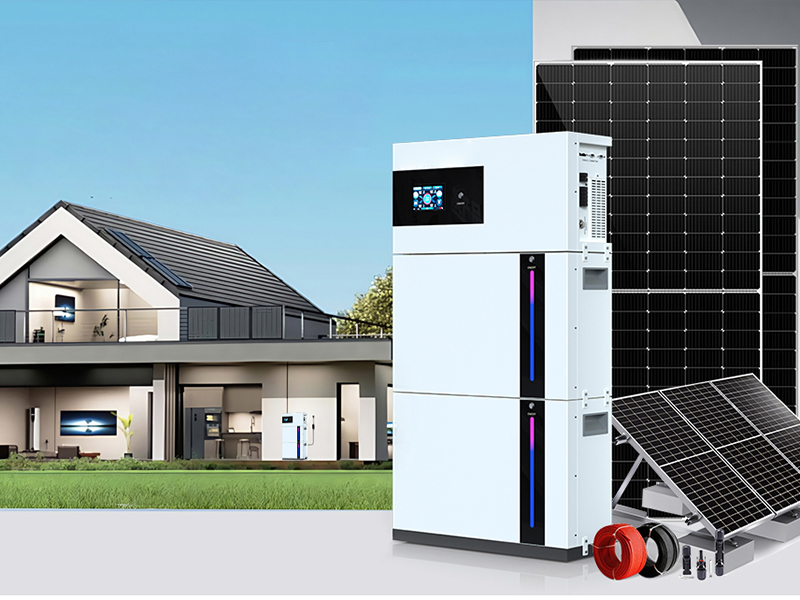
The first rays of sunlight hit the rooftop panels as Sarah poured her morning coffee, glancing at the sleek battery unit humming softly in her garage. A year ago, she had stared at her utility bill with disbelief. Today, that unit—a factory-direct OEM energy storage system—had cut her grid dependence by nearly eighty percent. Her journey from skeptical homeowner to solar storage advocate began with a simple realization: the panels alone weren't enough. The real magic happened when she discovered the world of original equipment manufacturers selling directly to consumers, bypassing the middlemen who had inflated prices for decades.
Why choose factory-direct? The answer lies in the economics of elimination. When you purchase from an OEM, you are buying from the very company that designs and builds the product, not a reseller who marks up costs by thirty to fifty percent. Sarah remembered comparing quotes: a branded system from a local installer cost $14,000, while the identical core components from the factory-direct OEM came to $8,200. The savings funded her entire installation labor. Beyond price, direct access meant she could customize every aspect of her storage solution—battery chemistry, capacity, inverter type, even the color of the enclosure. The OEM's engineers worked with her to design a 13.5 kWh lithium iron phosphate system that perfectly matched her household's evening consumption pattern.
The heart of any OEM system lies in its components. Sarah learned to distinguish between the battery cells, the battery management system (BMS), and the hybrid inverter. The BMS, she discovered, was the brain—monitoring temperature, voltage, and charge cycles to extend battery life. Her OEM allowed her to choose between LFP (lithium iron phosphate) cells known for their thermal stability and NMC (nickel manganese cobalt) cells that offer higher energy density but require more careful thermal management. She opted for LFP, prioritizing safety and longevity over raw capacity. Customization extended to the inverter's power rating, communication protocols, and even the mounting brackets that would attach to her garage wall.
Quality evaluation demanded vigilance. Sarah spent weeks researching certifications—UL 9540 for the complete system, UL 1973 for the battery, and IEC 62619 for industrial applications. She requested and received the OEM's test reports, verifying that their manufacturing facility held ISO 9001 certification. The factory's willingness to share this documentation, along with a transparent bill of materials, set them apart from less credible operations. She also checked the warranty terms carefully: a ten-year performance guarantee with a 70% capacity retention clause, backed by a U.S.-based service network.
| Component | Function | Key Specification | OEM Flexibility |
|---|---|---|---|
| Battery Cells | Energy storage | 280 Ah LFP | Chemistry choice |
| BMS | Safety monitoring | 200A continuous | Custom algorithms |
| Inverter | DC-AC conversion | 5 kW hybrid | Output waveform |
| Enclosure | Physical protection | NEMA 3R rated | Size and color |
| Thermal System | Temperature control | Passive cooling | Active options |
The cost breakdown surprised her with its clarity. The battery cells accounted for forty percent of the price, the BMS twenty percent, the inverter twenty-five percent, and the enclosure plus thermal management the remaining fifteen percent. Over the system's projected fifteen-year lifespan, Sarah calculated her payback period at just over six years, given her local electricity rates of $0.28 per kilowatt-hour. Federal tax credits reduced her initial outlay by thirty percent, while her utility's net metering program allowed her to sell excess daytime generation back to the grid. When a regional blackout hit in August, her OEM system automatically islanded, keeping her refrigerator, internet router, and medical equipment running for three full days.
Integration proved simpler than she had feared. The OEM provided a detailed wiring diagram, and her licensed electrician completed the connection in a single afternoon. The system communicated with her existing solar inverter via Modbus protocol, sharing real-time production and consumption data through a mobile app. She configured the software to prioritize solar charging during peak sunlight hours and discharge during the 4 p.m. to 9 p.m. rate window. The transition felt seamless—her home's energy flow now operated with the precision of a well-conducted orchestra, each component playing its part in perfect harmony.