
Understanding Off-Grid Solar Systems and OEM Manufacturing
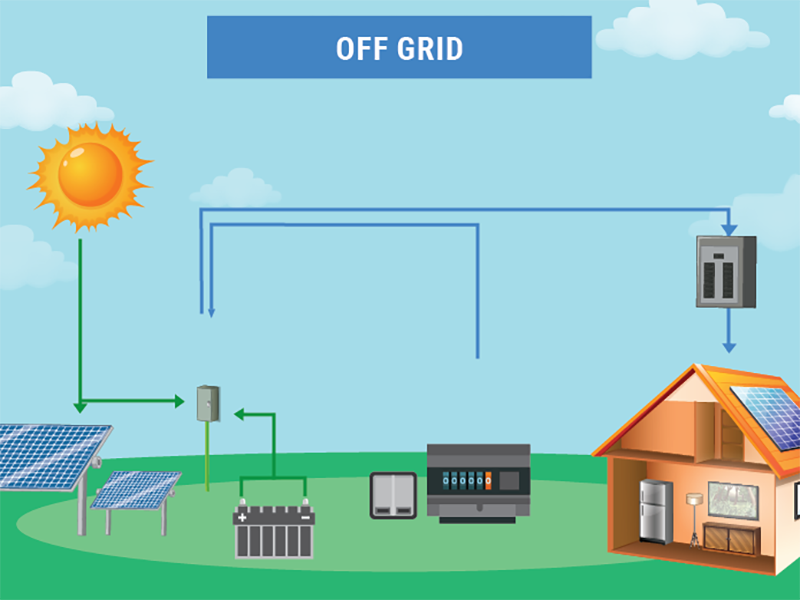
Off-grid solar systems are no longer a niche product for remote cabins. They power telecommunication towers, agricultural operations, and increasingly, entire residential communities in regions with unreliable grids. The core value proposition is energy independence, but the reality is that your system’s performance hinges entirely on the components and their integration. This is where OEM manufacturing matters. An OEM doesn’t just assemble parts; they engineer the entire power architecture—from charge controller algorithms to battery management systems—to match specific load profiles.
Key Criteria for Selecting an OEM Manufacturer
First, demand evidence of vertical integration. A manufacturer that controls its own battery cell sourcing and inverter PCB assembly will have far tighter quality control than one that merely buys off-the-shelf components and bolts them into a frame. Second, scrutinize their in-house R&D capabilities. Third, examine their existing client portfolio. A manufacturer supplying to military or mining operations has proven resilience standards that are worlds apart from consumer-grade suppliers.
| Evaluation Criterion | Why It Matters | Verification Method | Red Flag |
|---|---|---|---|
| Cell Sourcing | Battery lifespan is 90% cell chemistry | Request ISO certificates and supplier contracts | Vague origin claims ("imported cells") |
| Inverter Efficiency | Peak efficiency dictates daily usable power | Review CEC or IEC test reports | No performance curve data |
| Custom BMS Logic | Determines safety during overload | Ask for fault-injection test logs | BMS is a third-party black box |
| Warranty Terms | Reflects confidence in durability | Read for exclusions on "environmental stress" | 10-year warranty, but excludes humidity |
Customization Options and Design Flexibility
Standard catalog systems are a compromise. A genuine OEM partnership unlocks true design flexibility—but only if you know what to ask for. For instance, you can specify a hybrid inverter topology that prioritizes solar input during peak sun hours but seamlessly switches to generator backup during multi-day cloud cover. You can also adjust the battery discharge depth. Most standard systems limit discharge to 80% for longevity, but if your application is a seasonal hunting lodge, you might accept 95% discharge for reduced upfront battery costs. The best OEMs of the Off-Grid Solar System will model your specific location’s irradiance data (e.g., PVWatts for your site) and custom-tune the maximum power point tracking (MPPT) voltage window to your exact panel configuration.
Quality Assurance, Testing, and Compliance Standards
Quality in off-grid systems is not a binary pass/fail; it is a spectrum of environmental endurance. We can support compliance certificates for your target market—whether that is CE for Europe, UL 1741 for North America, or the newer IEC 62477 for power conversion equipment. Also we will run every assembled inverter at 100% load for 24-48 hours to weed out infant mortality failures.