
Why Off-Grid Power Systems Are Gaining Popularity
The global shift toward energy independence has accelerated dramatically over the past decade. According to the International Energy Agency, residential off-grid installations grew by 23% annually between 2019 and 2023, driven by rising electricity costs, frequent grid failures, and the increasing affordability of solar and battery technologies. In regions like California and Germany, where utility rates have doubled in five years, homeowners are discovering that a one-time investment in off-grid infrastructure often pays for itself within 7 to 10 years. Furthermore, extreme weather events—responsible for over $150 billion in grid-related damages in the U.S. alone during 2022—have made self-sufficiency a practical necessity rather than a luxury choice.
Key Components of a Home Off-Grid System
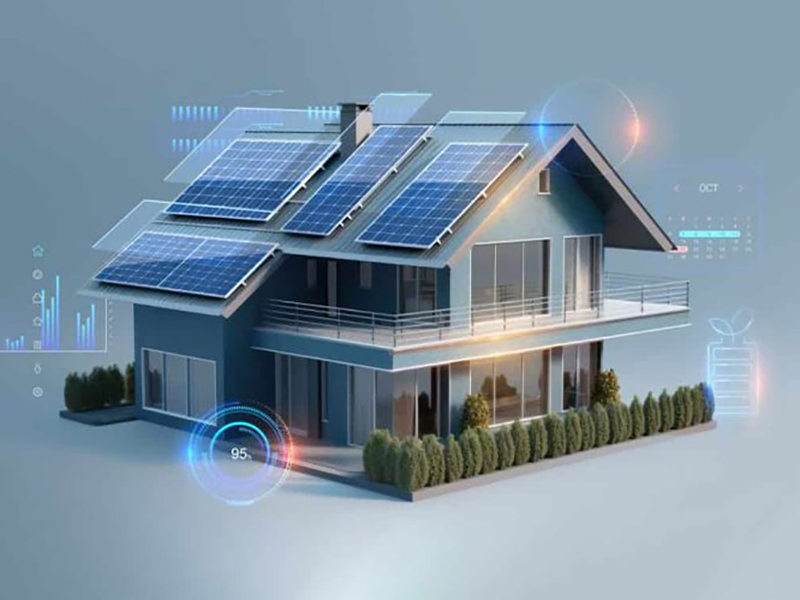
A complete off-grid solution rests on four core pillars: energy generation, storage, conversion, and control. Solar panels typically serve as the primary generation source, with capacity sized to meet peak household demand—an average 2,000-square-foot home requires roughly 8–12 kW of array capacity. Lithium iron phosphate (LiFePO₄) batteries have replaced lead-acid units as the storage standard, offering 3,000+ charge cycles at 90% depth of discharge. The charge controller and inverter form the system’s brain and heart: MPPT controllers optimize solar harvest by up to 30%, while hybrid inverters manage grid-tie, backup, and off-grid modes seamlessly. A well-designed system also includes monitoring hardware that tracks real-time energy flow, enabling predictive maintenance and load-shedding automation.
Advantages of Buying Direct from an OEM Manufacturer
Purchasing directly from an original equipment manufacturer (OEM) reshapes the cost-quality equation in three significant ways. First, price transparency eliminates the 30–50% retail markup that distributors and installers typically add. For a complete 10 kW system, this translates to savings of $8,000–$15,000—enough to upgrade battery capacity or add a backup generator. Second, OEM-direct buyers gain direct access to engineering support and firmware updates. When a manufacturer controls the entire production process, from cell selection to final assembly, they can provide tailored load calculations and system sizing without intermediary guesswork. Third, warranty handling becomes remarkably simpler. Instead of navigating a chain of resellers, homeowners file claims directly with the factory, and reputable OEMs often offer extended 10-year performance guarantees that match their component lifespans.
How to Choose the Right Off-Grid System for Your Home
Selecting the optimal system demands a rigorous audit of your energy profile and site conditions. Begin by calculating your daily consumption in kilowatt-hours—a family of four typically uses 25–40 kWh/day—then decide between a standard system and a hybrid one. Standard systems suit full independence, while hybrid configurations allow grid backup when solar production dips. Your geographic location dictates panel tilt, seasonal sun hours, and whether you need cold-weather battery insulation. It is equally vital to verify the OEM’s certification status (UL, CE, IEC) and request load-test reports from third-party laboratories.
| System Type | Daily Output (kWh) | Battery Capacity (kWh) | Typical Cost Range (USD) | Best For |
|---|---|---|---|---|
| Compact | 5–10 | 10–15 | 8,000–12,000 | Cabins, RVs |
| Standard | 20–30 | 20–30 | 15,000–25,000 | Average homes |
| Large | 40–60 | 40–60 | 30,000–50,000 | Large households, farms |
Future Trends in Off-Grid Power Technology
The next five years will witness three transformative shifts in residential off-grid systems. Solid-state batteries are projected to reach commercial viability by 2027, doubling energy density while slashing charging times to under one hour. Meanwhile, AI-driven energy management platforms will learn household consumption patterns automatically, shifting heavy loads to peak solar hours and extending battery life by 15–20%. Finally, vehicle-to-home (V2H) integration is gaining regulatory approval across Europe and parts of North America, enabling electric vehicles to serve as massive rolling batteries—a 75 kWh EV pack could power a typical home for three full days. As these technologies mature, the payback period for off-grid investments will shrink from a decade to as little as five years, making direct-from-OEM purchases an increasingly compelling proposition for the modern homeowner.