
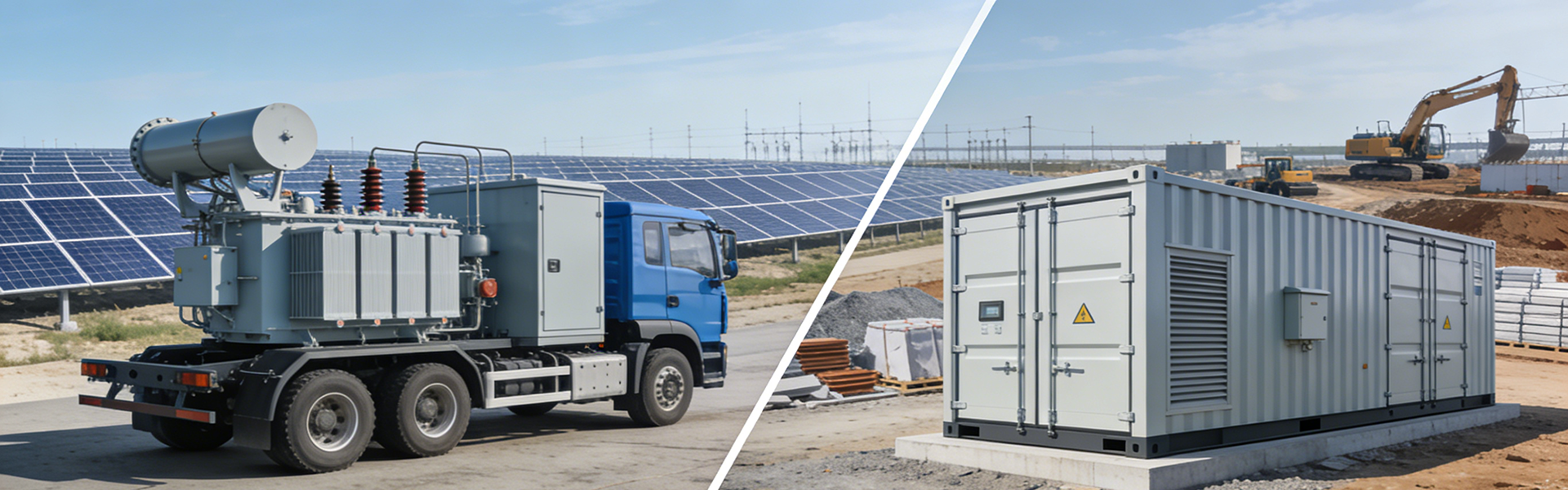
When the hum of transmission lines falters into silence, the economic and social cost begins to tick upward with every passing minute. For utilities, industrial sites, and municipalities, a stationary substation failure is not merely an engineering problem; it is a race against the clock. In these critical windows, the 35kV mobile transformer trailer emerges not as a stopgap, but as a strategic asset, engineered to compress weeks of traditional repair timelines into a single day of coordinated action.
Technical Design and Key Components of the 35kV Mobile Transformer Trailer
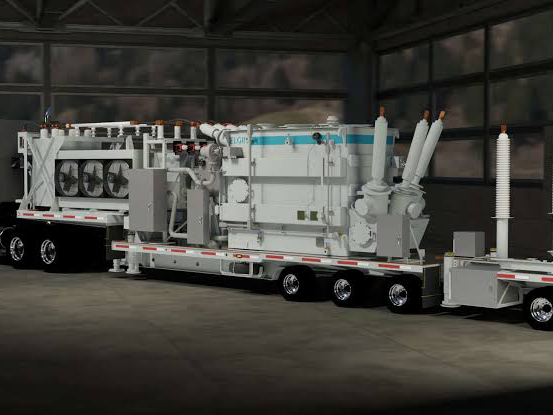
The efficacy of this solution lies in its self-contained architecture. At its core is a robust, low-loss 35kV power transformer, often rated between 5 MVA and 20 MVA, mounted on a heavy-duty hydraulic trailer. This is not a simple skid; it is a high-speed roadworthy vehicle, designed to navigate highway grades and tight industrial access roads without disassembly. The high-voltage side typically employs a load-break switch and surge arresters, while the low-voltage side integrates a modular switchgear compartment.
Critically, the design emphasizes connectivity over construction. Pre-fabricated cable terminations, scissor-lift mechanisms for overhead line access, and automated control panels allow the unit to synchronize with existing SCADA systems within minutes. The trailer’s integrated cooling system, whether oil-natural-air-natural (ONAN) or forced-air, is calibrated for continuous operation, ensuring that the temporary solution does not become a secondary point of failure. The entire footprint is condensed, allowing placement on existing concrete pads or even compacted gravel, bypassing the need for new civil works.
24-Hour Deployment Workflow: From Dispatch to Energization
The promise of a 24-hour turnaround is not a marketing boast; it is a logistical protocol. The workflow begins with a pre-planned dispatch protocol, where GIS coordinates and circuit diagrams are stored in regional depots. Upon failure confirmation, the trailer is connected to a prime mover and dispatched with a full complement of high-voltage test leads and control cables.
| Phase | Timeline | Critical Action |
|---|---|---|
| Alert & Dispatch | 0 – 2 hours | Trailer leaves depot; crew verifies route and site access. |
| Site Prep | 3 – 6 hours | Grounding grid verification; positioning of jacks and stabilizers. |
| Termination | 7 – 14 hours | HV cable connection to overhead lines; LV busbar link to load side. |
| Testing & Sync | 15 – 20 hours | Relay testing, dielectric checks, and phase rotation validation. |
| Energization | 21 – 24 hours | Closing of main breaker; load transfer complete. |
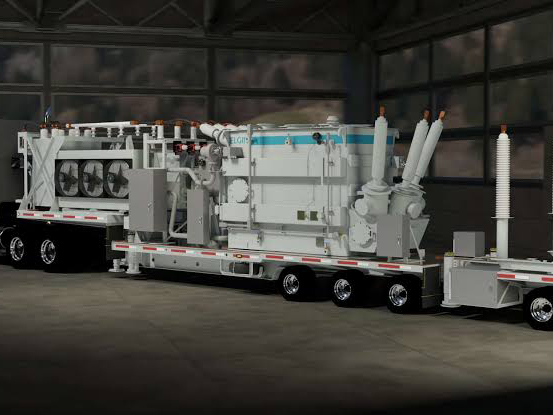
The secret to this speed is the parallelization of tasks. The use of multi-connector plugs, rather than hard-wired lugs, eliminates the most time-consuming step of traditional installations. This meticulous choreography ensures that the unit is ready for synchronized closing before the daily peak load period.
Future Trends and Maintenance Considerations for Mobile Substations
As grid resilience becomes a regulatory priority, the role of mobile substations is shifting from rare contingency to routine operational flexibility. Future developments point towards hybrid mobile units that integrate battery storage to provide instantaneous frequency response, and the use of eco-friendly ester fluids to replace mineral oil, reducing environmental risk during transport.