
The Need for Speed: Why 24-Hour Deployment Matters
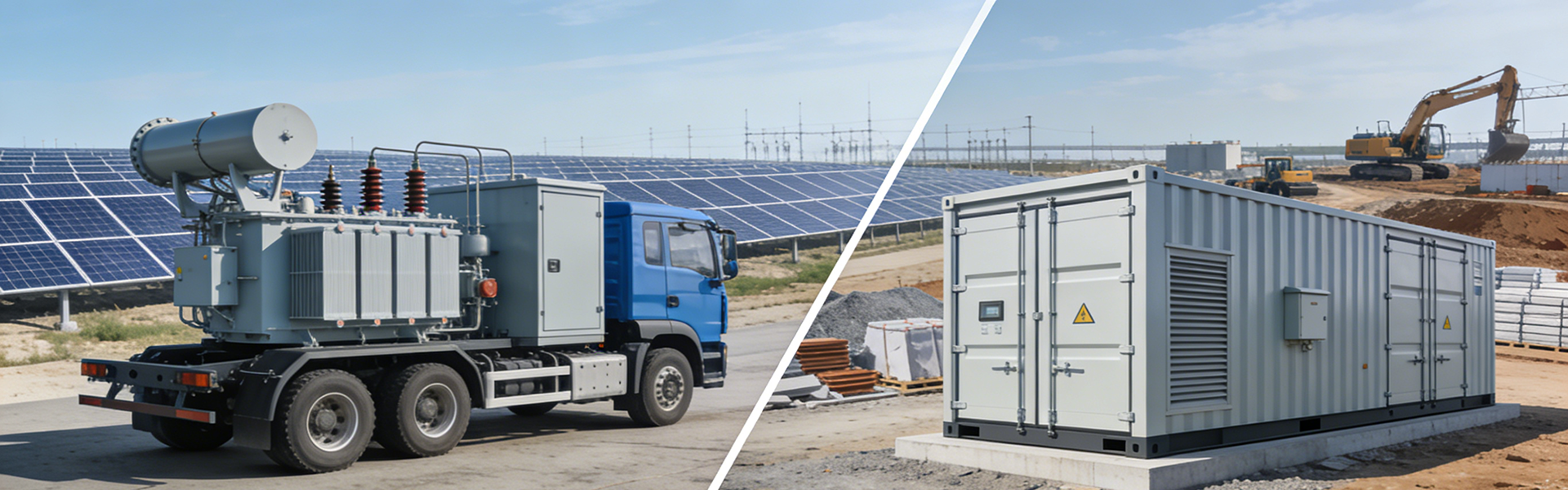
In the power industry, downtime is measured in lost revenue, disrupted lives, and sometimes, compromised safety. A failed transformer at a substation can cripple a hospital, halt a manufacturing line, or darken an entire district. Traditionally, replacing such equipment takes weeks—permitting, civil works, and crane scheduling stretch the timeline painfully. This is precisely where the 35kV mobile substation trailer becomes a game-changer. A unit that arrives and is energized within 24 hours transforms a potential crisis into a mere inconvenience. For utilities and industrial operators, this speed is not a luxury; it is a contractual necessity in an era of extreme weather and aging grid infrastructure.
Engineering Behind the 35kV Mobile Substation Trailer
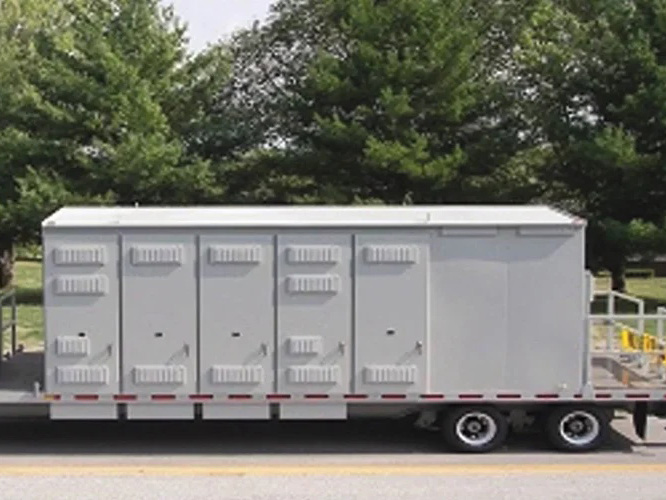
The promise of a 24-hour turnaround is meaningless without robust engineering. China manufacturers of the mobile substation trailer have mastered the art of compacting a full substation—transformer, switchgear, protection relays, and control panels—into a single road-worthy trailer. The core innovation lies in pre-commissioned, factory-tested modules. Every cable is pre-terminated, every relay is pre-programmed, and the entire system undergoes a simulated grid-tie test before leaving the factory floor. High-voltage bushings are retractable or foldable, allowing the trailer to meet standard road clearance regulations without sacrificing electrical performance. Furthermore, the use of SF6-insulated or solid-dielectric switchgear dramatically reduces the footprint compared to conventional air-insulated designs, enabling higher ratings in a smaller, more maneuverable package.
From Factory to Field: Logistics and Rapid Assembly Process
Speed is a function of logistics as much as engineering. China suppliers maintain a strategic inventory of these trailers, ready for immediate dispatch. The deployment sequence is choreographed down to the minute: a standard lowboy truck delivers the unit, while a separate crew prepares the foundation pad—often just a level gravel bed requiring no concrete curing. On-site assembly is intentionally minimal, focusing on three tasks: grounding, cable connection, and control wiring verification.
Case Studies: Emergency Power Restoration and Temporary Supply
The real proof of capability emerges in the field. After a typhoon knocked out a coastal chemical plant’s main substation in Fujian, a 35kV mobile unit was dispatched from the factory in Nantong. Within 22 hours, the trailer was on-site, connected, and supplying power to critical process loads, saving the facility from a costly shutdown of polymerization reactors. The mobile substation is not merely an emergency tool, but a strategic asset for planned maintenance and grid expansion projects.
Choosing the Right Partner: Quality, Compliance, and Support
Not all Chinese manufacturers are equal. A reliable partner must demonstrate compliance with international standards like IEC 62271 or IEEE C57, backed by official type-test reports. Crucially, buyers should scrutinize the supplier’s local service network and spare parts availability. A fast-deploying trailer is useless if the manufacturer cannot provide remote diagnostics or a technician on-site within 48 hours for a follow-up issue. The evaluation matrix below highlights key differentiators: