
Why Choose OEM Factory Direct for Solar and Storage
The solar energy market has matured beyond simple panel purchases. Homeowners and businesses increasingly demand integrated systems combining photovoltaic generation with battery storage. Yet the supply chain remains fragmented, with distributors, retailers, and installers each adding layers of cost and complexity. Sourcing directly from an original equipment manufacturer collapses that chain into a single point of contact. The factory becomes both designer and producer, translating technical specifications directly into physical hardware without intermediary markup.
This direct relationship transforms how buyers approach solar investments. Instead of selecting from pre-configured retail bundles, customers can align every component with their specific energy profile. A factory-direct partnership means the entity engineering the inverter logic and battery management system is the same one standing behind the warranty. It eliminates the blame-shifting that plagues multi-vendor installations, where a panel fault might be attributed to the battery, and a storage issue blamed on the inverter. With one manufacturer accountable for the entire ecosystem, troubleshooting becomes straightforward.

Key Components: Solar Panels and Battery Storage Explained
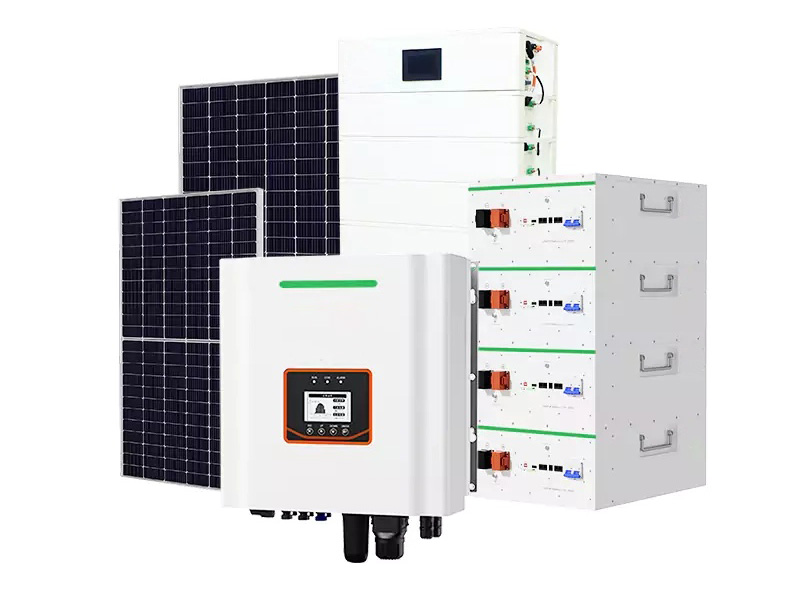
A complete solar-plus-storage system consists of three primary subsystems working in concert. The photovoltaic array converts sunlight into direct current electricity, with monocrystalline silicon cells dominating the premium segment due to their 20-23% efficiency ratings. The battery storage unit, typically lithium iron phosphate (LFP) chemistry, stores excess generation for nighttime use or grid outage backup. The hybrid inverter serves as the brain, managing DC-to-AC conversion, charge/discharge cycles, and grid interaction.
| Component | Function | Typical Lifespan | Efficiency Factor |
|---|---|---|---|
| Monocrystalline PV Panel | Sunlight to DC power | 25-30 years | 20-23% |
| LFP Battery Module | DC energy storage | 10-15 years | 92-95% round-trip |
| Hybrid Inverter | Power conversion & control | 10-12 years | 97-98% |
| Battery Management System | Cell balancing & safety | Matches battery | N/A |
Modern LFP batteries offer compelling advantages over older chemistries. They tolerate deeper discharge cycles without degradation, operate safely across wider temperature ranges, and provide 3,000-5,000 cycles at 80% depth of discharge. When factory-direct, these components arrive matched by the manufacturer, ensuring communication protocols align and thermal management systems coordinate seamlessly.
Cost Advantages and Quality Assurance of Factory Direct Sourcing
The financial case for factory-direct procurement rests on eliminating three distinct markup layers. A typical retail channel adds 15-25% at the distributor level, another 20-30% at the installer margin, and frequently embeds financing costs into quoted prices. Direct purchase collapses these into a single manufacturer price, typically saving 30-45% on comparable equipment. For a 10kW system with 20kWh storage, that difference often exceeds $8,000.
Quality assurance follows a different path in factory-direct arrangements. Rather than relying on third-party certifications alone, buyers can request test reports from the specific production batch, visit the facility for pre-shipment inspection, and negotiate customized burn-in testing. OEM factories maintain ISO 9001 quality management systems, but direct buyers can demand additional validation — thermal cycling tests, salt-spray corrosion checks, or mechanical load simulations tailored to their installation environment.
Warranties also improve with direct sourcing. Standard retail warranties might cover 10 years on panels and 5 years on batteries. Factory-direct terms frequently extend to 25-year performance guarantees on panels and 10-year capacity retention on storage, with streamlined claim processes since there is no intermediary to coordinate.
Customization Options for OEM Solar and Battery Systems
OEM factories excel at tailoring products to specific market needs. Buyers can specify panel dimensions to match unusual roof geometries, request specific connector types (MC4, Amphenol, or proprietary), or select frame colors that blend with architectural aesthetics. Battery systems offer deeper customization — voltage configurations from 48V to 800V, enclosure ratings from indoor to IP65 outdoor, and communication protocols including CAN, RS485, and Modbus.
The most significant customization often occurs at the system management level. Manufacturers can pre-configure inverters for specific grid codes, set charging algorithms for unique tariff structures, and program smart home integrations for demand response programs. This preconfiguration reduces installation time significantly — a customized, factory-tested system might install in one day versus three for a generic kit requiring extensive on-site configuration.