
Understanding the 5KW 10KWH Off-Grid Solar System
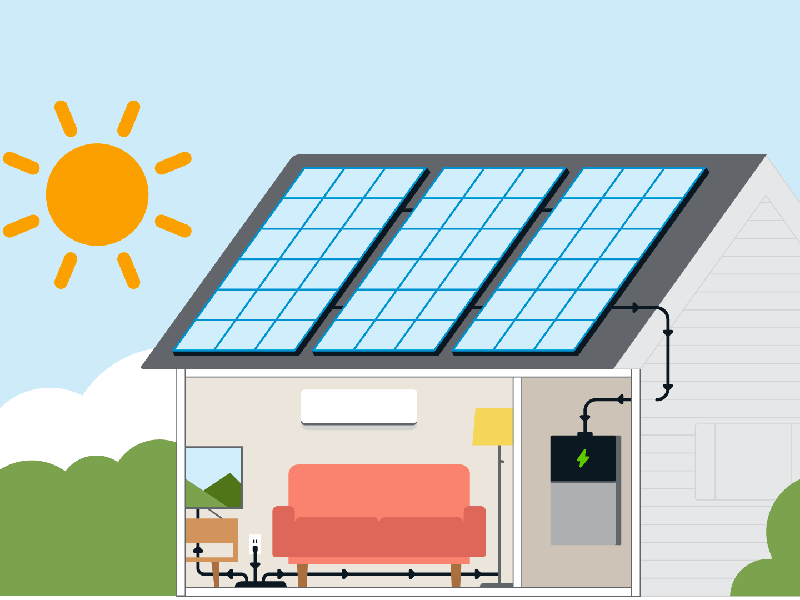
The 5KW 10KWH configuration represents the sweet spot for residential off-grid living. A 5KW inverter handles peak loads—refrigerators, pumps, power tools—while the 10KWH lithium battery bank stores enough energy to run essential appliances through the night. This pairing isn't arbitrary; it's engineered to balance daily solar generation against consumption patterns. For a typical three-bedroom home in a temperate climate, this system covers 80-90% of daily electricity needs without grid dependency.
Critics argue that 10KWH storage is insufficient for prolonged cloudy periods. True—but that's a straw man. The system's real value lies in its *daily cycling capability*, not indefinite autonomy. With proper load management, users can stretch reserves to 48 hours. The design philosophy here is pragmatic: enough capacity for 90% of scenarios, not overbuilt for the 1% extreme case that would require a generator anyway.
Why Choose OEM Manufacturer Direct Purchasing
The phrase "manufacturer direct" gets thrown around loosely, but genuine OEM access changes the game. When you buy from a brand that merely assembles third-party components, you pay for their marketing, warehousing, and retail margins—often 30-50% markup. Going direct to the OEM factory eliminates those layers. You're paying for aluminum, copper, lithium cells, and labor, not billboard ads.

Key Components and Quality Assurance in OEM Systems
Quality in off-grid systems isn't uniform—it's a chain of components, each with failure potential. A genuine OEM system integrates these parts with deliberate engineering:
| Component | OEM Standard | Aftermarket Risk |
|---|---|---|
| Inverter (5KW) | Pure sine wave, 94% efficiency | Modified sine wave, efficiency drops under load |
| Battery (10KWH) | LiFePO4, 6000 cycles @ 80% DOD | Unknown cell grade, thermal runaway risk |
| Charge Controller | MPPT, 98% tracking accuracy | PWM, 20% harvest loss |
| Monitoring | Real-time cloud telemetry | None or basic LCD |
The table reveals the core argument: OEM quality isn't about brand prestige—it's about matched component tolerances. A mismatched system—say, a cheap PWM controller paired with premium lithium cells—will degrade battery life by 40% within two years. OEM manufacturers test their components as a system, not as isolated parts. They publish honest cycle-life data because their reputation depends on it.

Cost Savings and Customization Options
Price transparency from OEMs cuts through the fog. A comparable branded system retails for $6,500-$8,500. Direct from the factory, the same 5KW/10KWH setup lands at $4,200-$5,800—a 25-35% reduction. But the savings run deeper than the sticker price. OEMs offer true customization: battery chemistry (LiFePO4 vs. NMC), inverter topology (low-frequency vs. high-frequency), even enclosure color for aesthetic integration. Resellers push standardized SKUs because customization breaks their inventory model.
Customization isn't vanity—it's performance optimization. A user in Arizona with high summer cooling loads can request a higher MPPT voltage range to maximize early-morning solar harvest. A user in Maine might prioritize cold-weather charging algorithms. These aren't luxury add-ons; they're engineering decisions that affect year-round system output by 15-20%.
Installation, Support, and After-Sales Services
The installation gap between OEM-direct and dealer-bought systems is narrowing. Modern 5KW systems come pre-wired with plug-and-play harnesses—most installations take 6-8 hours for a competent electrician. OEMs provide detailed schematics, video walkthroughs, and live remote commissioning support. The old argument that "you need a local expert" collapses when the OEM's engineering team is one WhatsApp message away.
After-sales is where OEMs have historically struggled, but the landscape has shifted. Leading manufacturers now offer 10-year warranties on inverters and 5-7 years on batteries—terms that rival or exceed dealer-backed systems. Spare parts shipping takes 3-5 days internationally, which is comparable to dealership backorders. The critical differentiator is firmware updates: OEMs push performance improvements directly to your system's controller, something resellers rarely manage. This isn't just support—it's a continuous improvement loop that keeps your system efficient for its entire lifespan.